Veal
Today's Veal
America’s veal farmers are committed to ensuring the health and well-being of their calves, taking care of the environment and providing safe, high-quality, nutritious food for consumers. Most veal calves are raised on small family farms, and veal-farming families are proud to share more about their ongoing dedication to doing what’s right.
Explore the Veal Lifecycle:


Starting on the Dairy Farm
The story of veal starts at the dairy farm. When a mother cow is bred on a dairy farm and give birth to a female or heifer calf, the calf stays at the dairy farm and joins the other milk-producing cows. If a male or bull calf is born, he is sold to farmers who raise him to a full grown 1,200-1,500 pound beef animal or to a 500 pound veal calf.

Growing on a Veal Farm
Veal farmers purchase dairy calves when they weigh 100 pounds and raise them until they are 5-6 months old. Veal calves live indoors, protected from extreme weather conditions and predators, in group pens where they can socialize and receive food and veterinary care. 700 farm families raise veal calves in the United States.

Nourishing Families
When calves reach 500 pounds (5-6 months old), they are sent to a packing plant where they are humanely processed into veal for sale in supermarkets and restaurants.

Nutritious, Delicious Way to Control Calories
A standard 3 oz. serving of many veal dishes are less than 400 calories and packed with nutrients. Put veal on your plate and discover that it is not just nutritious, but also delicious.
Learn more about today's Veal
This video is courtesy of the American Veal Association.

Make it memorable. Make it veal.
Veal is not only delicious and nutritious, but it is also easy to prepare. Click on one of our recipes for a quick and easy meal solution, or create your own veal masterpiece using one of the traditional Cooking Methods.

Cooking Methods for Veal
Veal can be sautéed, stir-fried, braised, stewed, grilled or broiled. Choosing the right method of preparation is important. No matter which cooking method you choose to prepare your veal, keep one thought in mind: “The key to veal is not to overcook.”


Veal's Nutritional Profile
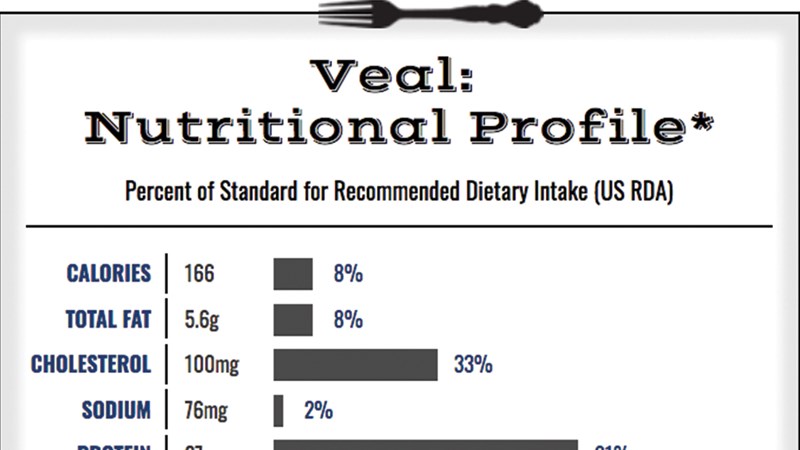
Put simply, veal is a nutritional power source. Recent USDA data reveals that a 3 oz. cooked, trimmed serving of veal provides less than 10% of the calories recommended for a 2,000 calorie diet. At the same time, veal delivers more than 10% of the daily values for protein, zinc, niacin, as well as vitamin B-12 and B-6. Protein and B-vitamins help us increase our energy levels. Zinc maintains immune function and plays a key role in growth and cognitive development.
Let's explore the power house of nutrition
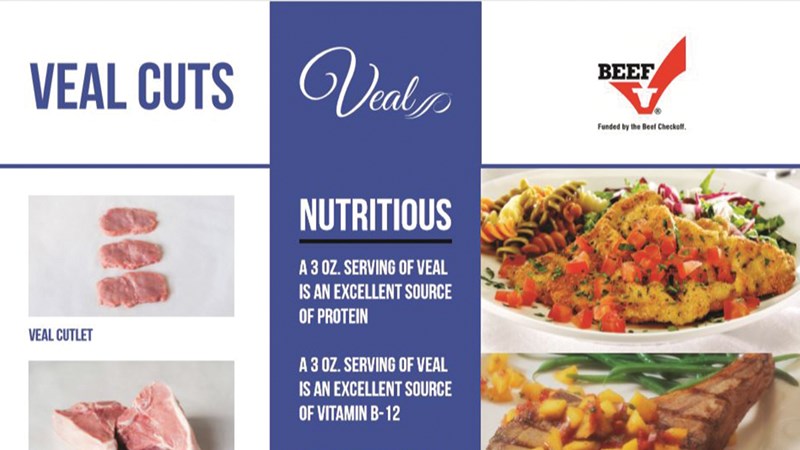
Veal is nutritious – an excellent source of protein, iron and vitamin B-12. Veal is delicious – offering a delicate flavor and versatility. Veal is easy to prepare – try sautéing, stir-frying or grilling!